
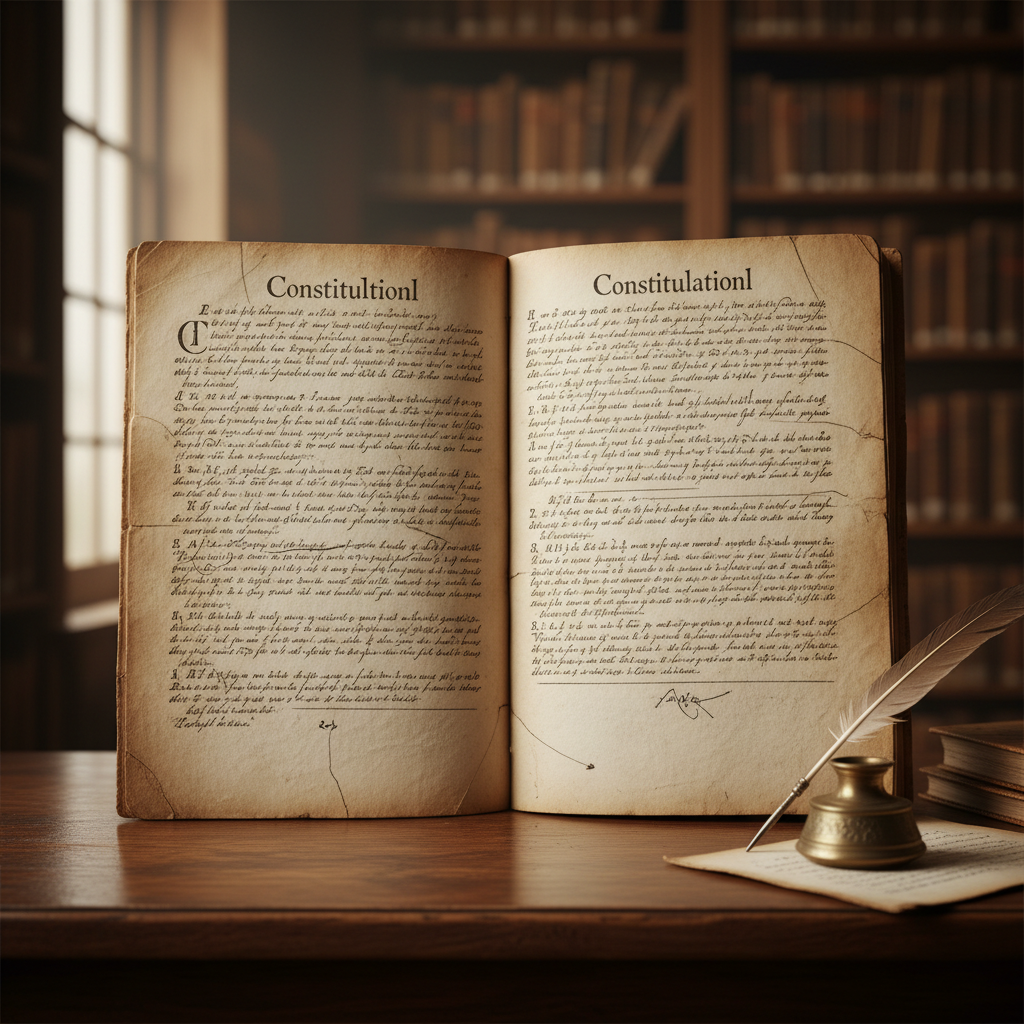
Every Right Has a First Draft.
Crack open constitutional clauses like old case files. Each post traces a right or a ruling back to the ink-stained argument that birthed it.
§ Origin Vignette
"On the fourteenth of September, 1787, James Madison rose to object — not to the clause itself, but to the margin too narrow for the argument it would one day carry."
— Constitutional Convention, Philadelphia, 1787
Amendments Traced
27 complete
Years of Rulings
235+ covered
Weekly Readers
14,200 subscribers
Source Documents
800+ cited
The Origin Story Engine
Scroll backward through time.
Each constitutional question today carries centuries of argument. We peel back the layers — from the courtroom to the quill.
Can a state ban social media platforms from moderating political speech?
The Florida legislature argued that platforms had become the modern public square — and that silence, too, was a form of censorship.
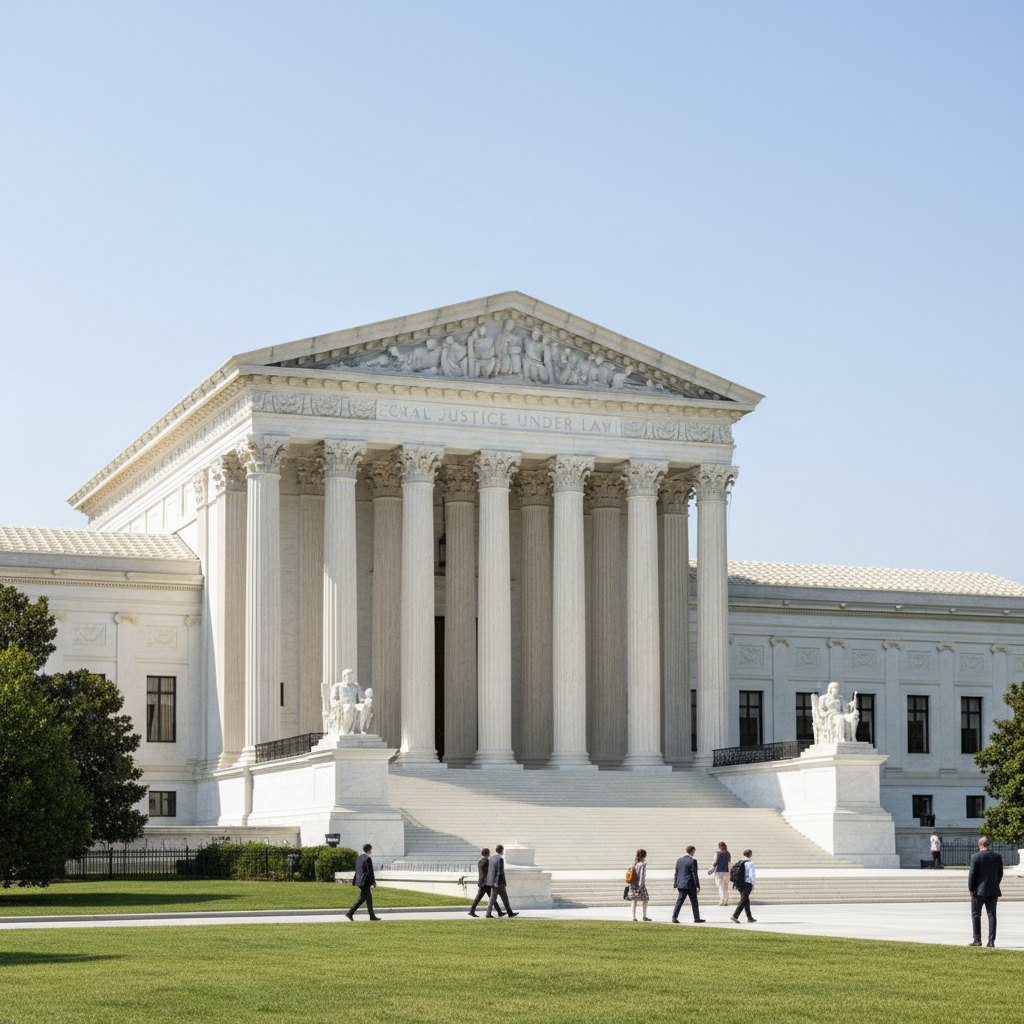

Brandenburg v. Ohio established that speech is protected unless directed to inciting imminent lawless action.
The Court unanimously overturned Whitney v. California, narrowing the government's power to punish inflammatory speech to a precise, two-part test.
Madison wrote in protest: "It is a melancholy reflection that liberty should be equally exposed to danger whether the Government have too much or too little power."
Did you know?
The Alien and Sedition Acts of 1798 were signed by John Adams — a Founding Father who believed free speech had limits when national security was at stake.
§ Clause at Issue
"Congress shall make no law... abridging the freedom of speech, or of the press."
First Amendment, 1791
"The people shall not be deprived or abridged of their right to speak, to write, or to publish their sentiments — and the freedom of the press, as one of the great bulwarks of liberty, shall be inviolable."
— James Madison's draft, June 8, 1789
This draft became the First Amendment, ratified December 15, 1791.
Read the full trace →Deep Dives
Clauses worth cracking open.

The Commerce Clause: How "regulate commerce" became the federal government's Swiss Army knife
From Gibbons v. Ogden's steamboats to the Affordable Care Act's individual mandate — no clause has stretched further from its original intent.
Read the full traceBy the Numbers
1,500+ cases
Federal court decisions citing the Commerce Clause since Gibbons (1824)

The Fourth Amendment's "unreasonable search" — written before electricity, applied to your iPhone
Carpenter v. United States (2018) forced the Court to ask: what would Madison make of cell-site location data?
Pull Quote
"The Constitution is not a suicide pact — but neither is it a blank check."
— Justice Robert H. Jackson, Terminiello v. Chicago (1949)
Equal Protection: The clause that remade America twice
Reconstruction's promise, Plessy's betrayal, Brown's redemption.
Constitutional IQ Assessment
Test your constitutional knowledge.
Ten scenario-based questions. No multiple guesses. See how you read the Constitution before the Court does.
Scenario
A small town in Ohio passes an ordinance banning all political yard signs more than 30 days before an election.
Which constitutional clause is most directly implicated?
Who Reads Amend
From the margins of their own notes.
Pre-law students at 2 a.m., civics teachers hunting for classroom-ready breakdowns, policy staffers who need a provision's lineage explained before tomorrow's markup session.
I assigned the Commerce Clause deep dive to my AP Government class. Three students came back the next day having read every linked source. That doesn't happen with a textbook.
Margaret Okafor
AP Government Teacher · Columbus, OH
Before a markup session on the privacy bill, I needed the Fourth Amendment's digital lineage in one place. Amend had it — Carpenter, Katz, the Olmstead dissent. Saved me two hours of research.
David Reinholt
Policy Analyst, Senate Judiciary · Washington, D.C.
The quiz told me I was 'First-Year Associate' level. I'm a second-year law student. I've been reading every origin story since. The Wickard piece alone reshaped how I think about the Commerce Clause.
Priya Subramaniam
2L, University of Michigan Law · Ann Arbor, MI
What makes Amend different is the source discipline. Every claim traces back to a primary document. In a world of hot takes, that's rare.
James Thibodeau
Constitutional Law Professor · New Haven, CT
The Amend Archive
14,200+
Weekly Subscribers
27
Amendments Fully Traced
800+
Primary Sources Cited
235
Years of Rulings Covered